 Mackenzie Wilson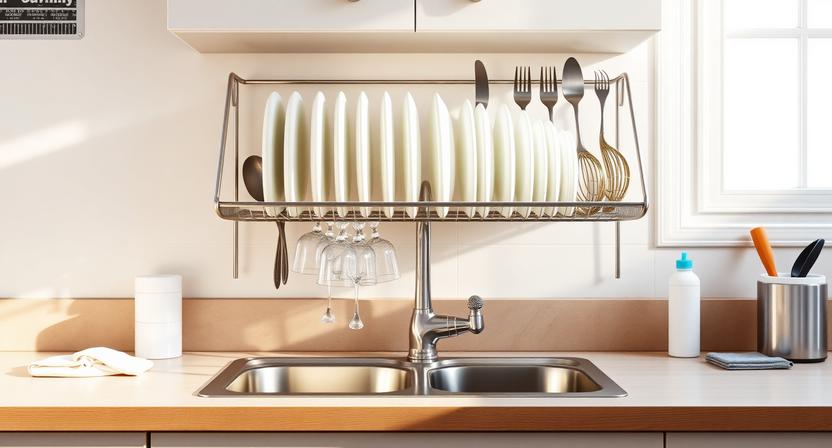
For years, the standard dish rack has been a quiet source of frustration in kitchens. It takes up valuable counter space, collects water, and somehow always seems to be in the way right when you need room the most.
Now, a new approach is changing how people think about drying dishes and organizing their kitchens. Instead of spreading out across the counter, these solutions move upward, using space that was always there but rarely used.
The result is a kitchen that feels cleaner, more open, and far easier to manage on a daily basis.
Why Traditional Dish Racks Are Falling Out of Favor
The classic dish rack was designed for convenience, but it comes with tradeoffs that no longer fit modern kitchens.
Counter Space Is More Valuable Than Ever
In many homes, especially apartments and smaller layouts across the United States, counter space is limited. A bulky rack can easily take over an area that could be used for cooking, prep work, or even just keeping things visually clean.
Water Build-Up Creates Ongoing Mess
Traditional racks often leave behind puddles or damp surfaces. Over time, this can lead to stains, odors, or even mold if not cleaned regularly.
They Interrupt the Flow of the Kitchen
Cooking becomes less efficient when your workspace is crowded. Moving dishes, shifting racks, and working around clutter slows everything down.
These small frustrations have pushed homeowners and renters to look for smarter alternatives.
The Rise of Over-the-Sink Dish Racks
One of the biggest shifts is the move toward over-the-sink drying systems. Instead of sitting on the counter, these racks sit above the sink, allowing water to drain directly where it belongs.
How They Work
These racks are designed to span the width of your sink. Plates, glasses, and utensils sit above the basin, and any water drips straight into the drain.
This simple change removes one of the biggest issues with traditional racks, standing water on your counter.
Why They Instantly Improve Kitchen Organization
By moving the drying area above the sink, you free up a surprising amount of space. What used to be a cluttered corner becomes usable again.
It also creates a cleaner visual look. With fewer items spread across the counter, the entire kitchen feels more organized.
Flexible Designs That Fit Most Homes
Many of these systems are adjustable, making them suitable for different sink sizes. Some are collapsible, allowing you to store them away when not in use.
This makes them especially appealing for renters or anyone who wants a simple upgrade without permanent changes.
The Hygiene Advantage Most People Don’t Think About
A major benefit of over-the-sink racks is cleanliness.
With water draining directly into the sink, there is less chance for moisture to sit on surfaces. This reduces the risk of bacteria buildup and keeps your kitchen drier overall.
In busy households, that difference can add up quickly.
The Next Step: Rethinking Pot and Pan Storage
Dish racks are only part of the story. Another growing trend is moving pots and pans out of cabinets and onto walls or overhead racks.
Why Hanging Storage Is Becoming Popular
Heavy cookware takes up a lot of space. Stacking it in cabinets can make it hard to access and easy to clutter.
Wall-mounted rails and pot racks solve this by keeping items visible and within reach.
Turning Storage Into a Design Feature
Instead of hiding everything away, these systems display cookware in a way that adds character to the kitchen.
Depending on the material and style, they can make the space feel more modern, more rustic, or more professional.
Practical Benefits You Notice Every Day
Having pots and pans easily accessible speeds up cooking and reduces the need to dig through cabinets.
It also frees up storage below, making the rest of your kitchen more functional.
How to Choose the Right Setup for Your Kitchen
Measure Your Space Carefully
Before choosing an over-the-sink rack, check the width and depth of your sink. A proper fit ensures stability and avoids awkward overhang.
Look for Durable Materials
Stainless steel is a popular choice because it resists rust and handles moisture well. Coated materials can also work if they are designed for kitchen use.
Consider Your Daily Routine
Think about how often you cook and how many dishes you typically use. A larger household may benefit from a multi-tier rack, while a smaller setup may only need a compact version.
Match Style With Function
Choose a design that blends with your kitchen rather than standing out awkwardly. Clean lines and neutral finishes tend to work well in most spaces.
Simple Ways to Take the Setup Further
Once you shift to vertical storage, it becomes easier to organize the rest of your kitchen.
Wall-mounted knife holders, pegboards, and small shelves can complement your dish rack and create a cohesive system.
Even adding one or two of these elements can make a noticeable difference.
Why This Trend Is Gaining Momentum
The appeal of these solutions is not just about aesthetics. It is about efficiency.
People want kitchens that work better without requiring a full renovation. Over-the-sink racks and vertical storage deliver that with minimal effort.
They are affordable, easy to install, and immediately improve how the space functions.
The Bottom Line
Traditional dish racks are not disappearing overnight, but they are no longer the only option.
By shifting upward and using space more intentionally, modern kitchens are becoming cleaner, more organized, and easier to use.
Sometimes, the biggest improvement is not adding more space. It is using the space you already have in a smarter way.
And once you experience a clear, uncluttered counter, it is hard to go back.